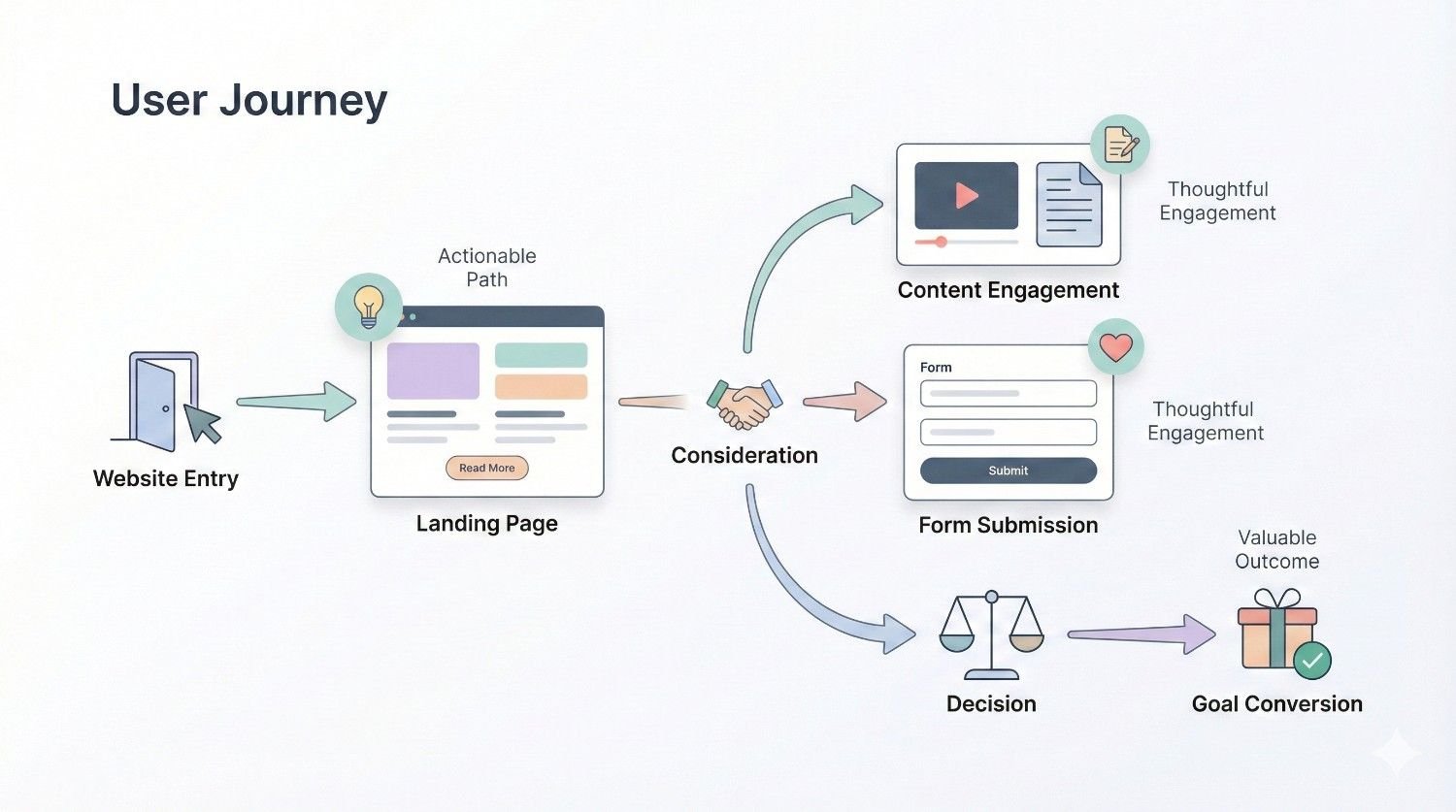
In digital marketing, beginners often focus on one main goal — getting more traffic.
They work hard on SEO, social media, or ads and feel successful when visitors start coming to their website. But after some time, a common problem appears.
Traffic increases, but results don’t.
This is where an important and highly demanded skill comes in — Conversion Thinking.
What Is Conversion Thinking?
Conversion thinking means focusing on what the visitor does after they arrive, not just how they arrive.
A conversion could be:
- Reading an article fully
- Clicking a link
- Signing up for a newsletter
- Understanding a concept clearly
In simple words, it’s the skill of asking:
“Is this page helping the visitor take the next logical step?”
Why This Skill Is in High Demand
Many businesses already get traffic.
What they lack is effective conversion.
That’s why marketers who understand conversion thinking are valuable:
- They improve results without increasing traffic
- They reduce wasted ad spend
- They improve user experience
This skill is used in:
- SEO
- Content marketing
- Google Ads
- Landing pages
- Email marketing
It quietly improves everything.
The Common Beginner Mistake
Most beginners believe:
“If traffic comes, results will follow automatically.”
I remember feeling excited when my early content started getting views, only to realize later that visitors were leaving without really engaging. That’s when it became clear that attracting users and guiding users are two very different skills.
Traffic brings people in.
Conversion thinking helps them stay, understand, and act.
Conversion Thinking Is Not About Manipulation
A common misunderstanding is that conversions mean tricks or persuasion.
Good conversion thinking is actually about:
- Clarity
- Simplicity
- Removing confusion
- Making content easy to follow
When users don’t have to think hard about what to do next, conversions improve naturally.
How Conversion Thinking Works in Content
In content marketing, conversion thinking looks like:
- Clear headings
- Logical flow
- Simple language
- Helpful examples
- Smooth transitions
Instead of overwhelming readers, you guide them step by step.
A reader who understands is more likely to stay, trust, and return.
Why This Skill Is Hard to Learn at First
Conversion thinking doesn’t come from tools alone.
It comes from:
- Observing user behavior
- Noticing where users get confused
- Testing small changes
- Learning from mistakes
Over time, you stop writing just to “publish” and start writing to communicate effectively.
That mindset shift is what makes this skill powerful.
How Beginners Can Practice Conversion Thinking
You don’t need advanced software to start.
Before publishing any content, ask:
- What is the purpose of this page?
- What should the reader understand by the end?
- Is the next step clear?
Over time, I noticed that even small changes in clarity—like simplifying explanations or improving structure—often made content more effective without bringing in more traffic.
I noticed that once I started asking these questions regularly, content performance improved without changing traffic sources.
Why Conversion Thinking Will Always Matter
Algorithms change.
Platforms change.
Tools change.
But human behavior doesn’t change as fast.
Conversion thinking is a long-term digital marketing skill that stays relevant regardless of trends. That’s why it’s in high demand and likely to remain so.
Final Thoughts
Digital marketing success is not only about visibility.
It’s about effectiveness.
Conversion thinking teaches you to respect the user’s time, attention, and intent. When you focus on helping users move forward naturally, results follow without force.
At Skillash, the goal is to highlight these core skills that quietly shape successful digital marketing — especially for beginners who want to build a strong foundation.
Traffic opens the door.
Conversion thinking decides what happens next.